
By Kate Eubanks
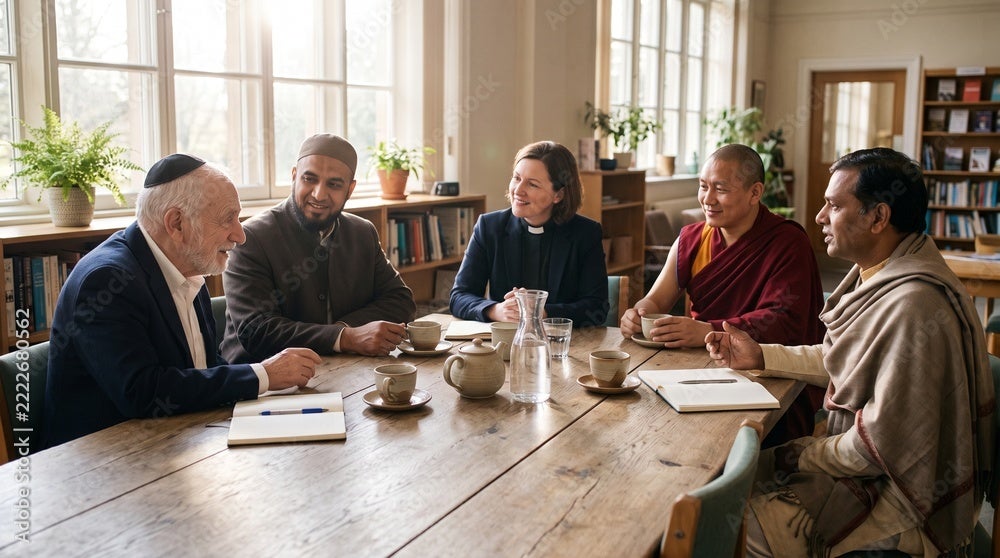
Nearly all religious leaders interviewed for the Boniuk Institute's Houston Religious Leadership Project see religious diversity as a benefit to their city. But what, specifically, makes that diversity valuable, and how can communities build on its potential?
Researchers from the Boniuk Institute and its Religion and Public Life Center explored these questions through a series of interviews and focus groups with religious leaders representing the diverse faith communities of Houston, Texas.
Leaders identified several benefits of religious diversity:
- Learning across difference. Encounters with people of other faiths offer opportunities to develop religious literacy and build personal connections that go beyond book knowledge.
- Reflecting on one's own beliefs. Exposure to different traditions can prompt people to question assumptions, deepen their understanding of their own faith, and recognize different paths to truth.
- Finding a religious home. A diverse religious landscape gibes people--including immigrants and members of minority traditions--opportunities to find communities where they feel a sense of belonging.
- Building a stronger civil society. Leaders described religious diversity as an opportunity to foster religious freedom, develop democratic capacities, and contribute to the common good.
As one Muslim leader explained, different communities have complementary strengths: "What I don't have, what I"m lacking, I may find it in another community. But I may have something that the other community also needs."
Leaders also acknowledged barriers to realizing these benefits, including intolerance, suspicion, political polarization, language differences, and the practical challenges of connecting across a sprawling city like Houston.
Discoveries and insights from the Houston Religious Leadership Project are being translated into practical strategies that leaders can use to navigate differences, address barriers to collaboration, and build stronger relationships across communities. Findings are also helping to inform the development of practical tools for religious and civic leaders working on the front lines of interfaith engagement through initiatives such as Convergence, a hands-on workshop on multifaith collaboration, which will bring more than 100 religious and nonprofit leaders to Rice University to network and work through the process of creating and sustaining interfaith collaborative efforts.
<<<Explore the full findings of the Houston Religious Leadership Project
<<<Learn more about the Convergence Workshop