
By Kate Eubanks
Over the past two years, researchers at Rice University’s Boniuk Institute for the Study and Advancement of Religious Tolerance and its Religion and Public Life Center have conducted an ambitious study examining interreligious leadership and collaboration in Houston, Texas. Generously funded by the Arthur Vining Davis Foundations, the Houston Religious Leadership Project included 62 interviews, four focus groups, and ongoing conversations with an advisory board of religious leaders from diverse faith traditions. Together, participants explored how religious leaders approach diversity, respond to social challenges, and work across differences to support the common good. This article is part of a series highlighting key findings from the study and what they reveal about the future of interfaith leadership in Houston and beyond.
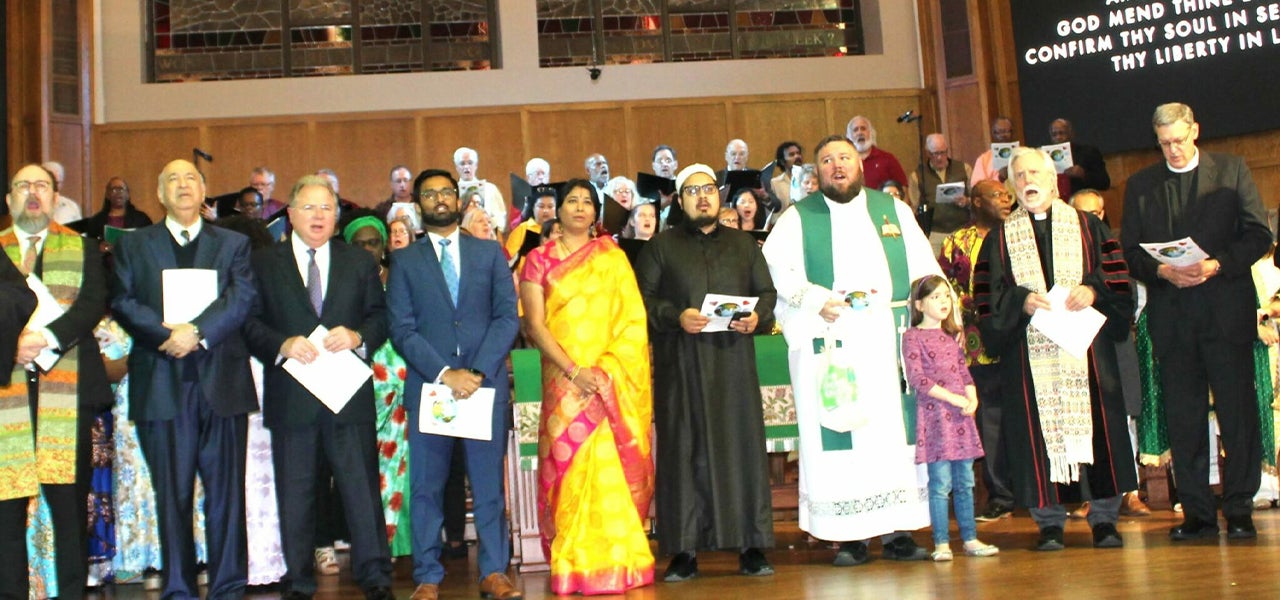
Houston is one of the most religiously diverse cities in the United States. Its neighborhoods include churches, mosques, synagogues, temples, gurdwaras, and religious communities representing traditions from across the globe. Yet amid growing national anxiety about polarization and division, many Houston religious leaders see this diversity not as a challenge to overcome, but as one of the city’s greatest strengths. That was one of the clearest findings from the Houston Religious Leadership Project. Nearly every leader interviewed described Houston’s religious diversity as a positive force that enriches civic life, deepens understanding, and creates opportunities for collaboration.
Many leaders spoke about diversity with a sense of curiosity and even awe. For some, interacting with people from different faith traditions strengthened their own religious convictions by encouraging deeper reflection. Others emphasized how diversity helps cultivate empathy, humility, and stronger human relationships across difference. Leaders also highlighted the important role religious communities play for immigrants and newcomers to Houston. In a city where nearly one in four residents is foreign-born, congregations and religious institutions often provide more than spiritual support. They help people find belonging, navigate unfamiliar systems, and build community in a new home.
Perhaps most importantly, leaders described religious diversity as essential to democratic life itself. The ability to live peacefully alongside difference—and to work together despite disagreement—was viewed as a civic skill that Houston is uniquely positioned to develop. At a time when conversations about religion often focus on conflict, Houston offers another story: one in which diversity can become a source of resilience, cooperation, and shared flourishing. The city’s long history of interfaith leadership suggests that religious difference does not have to divide communities. Under the right conditions, it can strengthen them.