
By Elaine Howard Ecklund
At the Boniuk Institute, our vision is both straightforward and ambitious: We want to understand the conditions that lead to religious conflict, tolerance, and pluralism, and then help people apply our findings. This vision shapes not only the research we pursue, but also how we think about what a research institute can do.
Understanding comes first. Religious conflict, tolerance, and pluralism are complex phenomena that cannot be understood from a single disciplinary perspective. They involve questions about human behavior, institutions, communities, beliefs, social change, and public life. That is why multidisciplinary scholarship is at the heart of the Institute. But research, on its own, is not enough. If we want scholarship to contribute to a more pluralistic society, we also need to create opportunities for people to encounter research, test ideas, learn from one another, and consider how evidence might inform practice.
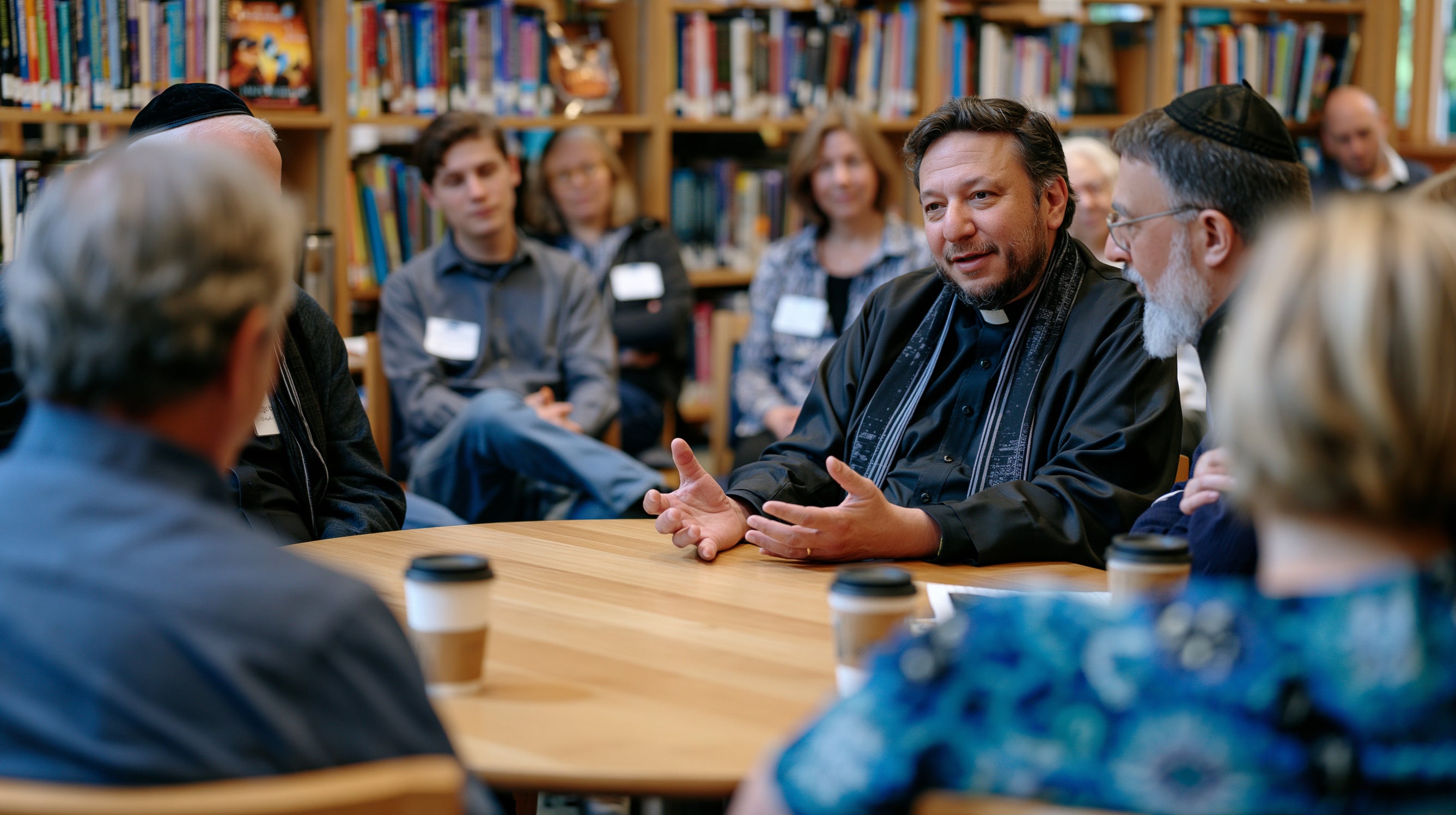
My vision for the Boniuk Institute is to bring these strands of work together, and support the scholars, students, and partners whose different perspectives make the Institute’s mission possible. Our upcoming Convergence Workshop is one example of this approach. Building on the Houston Religious Leadership Project, the workshop brings religious and civic leaders together to explore how the findings from that research can inform practical approaches to interreligious collaboration. The goal is not simply to share research with practitioners, but to create a space where research and lived experience can inform one another. In this sense, the workshop represents an important step in moving from understanding religious diversity to thinking about how communities can work constructively within it.
We are taking a similar approach with the Responsible Futures convening this fall. This gathering will bring national and international scholars and leaders from a range of disciplines and projects together to begin shaping a large-scale research agenda examining the relationship between faith, religion, spirituality, morality, and emerging technologies such as artificial intelligence. The convening is an opportunity to ask foundational questions about where scholarship is most needed as technology changes the conditions of human life. Rather than approaching emerging technologies only as technical or economic phenomena, we want to understand the moral and spiritual dimensions of the futures they are helping to create.
Our fall programming extends this work into multiple communities. Religious and Civic Leader Gatherings create opportunities for scholars and practitioners to engage one another around emerging questions facing religious communities and public life. Scholars Meetings foster interdisciplinary exchange within the research community. And presentations at industry conferences allow us to bring scholarly perspectives into conversations beyond the university. Each serves a different audience, but all are part of the same larger effort: connecting knowledge to the people and institutions that can use it.
We are also investing in the next generation of this work. We are pleased to reappoint religion scholar Judith Brunton as the Boniuk Institute Faculty Fellow for the coming year. Our undergraduate and graduate scholars contribute to the intellectual life of the Institute, and gain valuable skills to integrate religious literacy in their future workplaces (this could be re-worded better).
Taken together, these activities reflect a single vision. We conduct research to understand the forces that shape religious conflict, tolerance, and pluralism. We bring people together to deepen that understanding; and we create opportunities to apply what we learn. For us, that is what it means to be an interdisciplinary research institute—and what it means to connect scholarship to public life.