
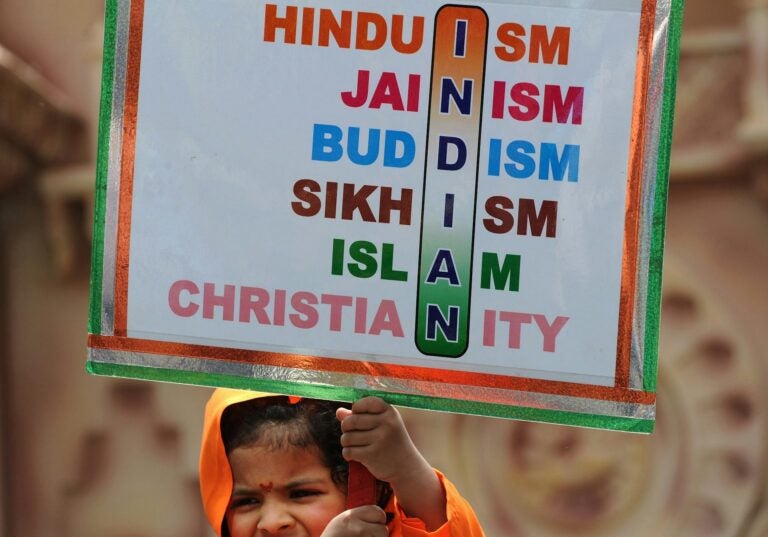
What can the lives of a Hindu soldier and a Muslim poet reveal about religious identity in 19th-century India? In this article, Aishwarya Lakshmi examines the memoirs of Sitaram Pande, a Brahmin soldier in the Bengal Army of the British East India Company, and Mirza Ghalib, the renowned Muslim poet and writer from Delhi. Their accounts offer a window into a period when religious identities were deeply meaningful but rarely existed in isolation from other forms of belonging.
Pande’s memoir describes the sacred geography of Hindustan through imagery drawn from Sanskrit traditions. Yet his experiences also challenged prevailing expectations around caste, ritual purity and social boundaries. His decision to marry a Hindu woman from a different social background illustrates how lived experience could complicate rigid understandings of religious and caste identity.
Ghalib’s memoir, Dastanbuy, provides a different perspective. Writing about Delhi during and after the 1857 revolt, he portrays the city as a cosmopolitan place where Hindus, Muslims and British residents lived and worked alongside one another. His vision of Delhi as a garden reflects Islamic understandings of paradise while also emphasizing the city’s shared cultural and literary life.
Together, these histories challenge the idea that religious identities have ever been entirely “pure” or separate. They reveal a more complex history of Hindu-Muslim relations, religious pluralism and overlapping identities in India, offering important historical perspective on contemporary debates about religion, diversity and communal belonging.