
By Madeleine Yuan, Boniuk Institute Undergraduate Scholar
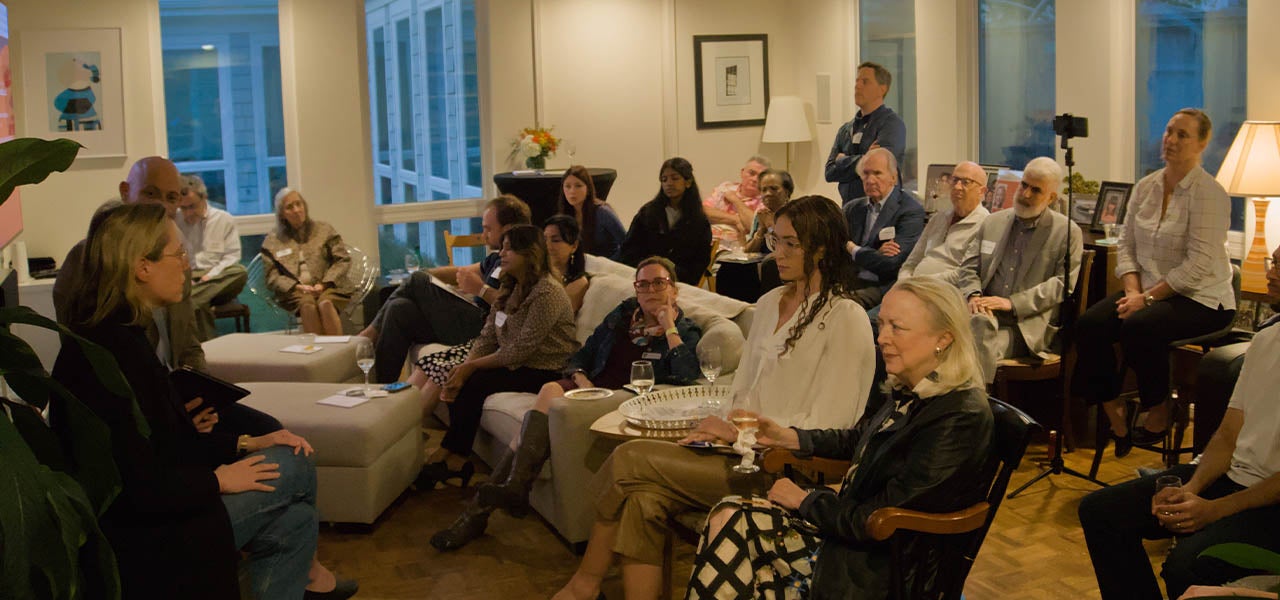
October 19, 2026. Ruth Graham national correspondent for religion, faith, and values at The New York Times, joined the Religion and Public Life Center's Religious and Civic Leader Gathering to discuss the changing landscape of American religious life. Raised in evangelical Wheaton, Illinois, and now based in Dallas, Graham reports on how religion influences American politics--and how politics, in turn, shapes religious life. Drawing on her reporting across the country, she explored several developments that may help define the future of faiths in America.
Graham discussed the role of Christian faith in the political lives of two potential Democratic candidates: Texas Presbyterian James Talarico and Adam Hamilton, a mainline Methodist megachurch pastor from Kansas. Drawing on her time reporting at St. Andrew Presbyterian Church in Austin, where Talarico worships, Graham described a congregation whose progressive outlook differs from that of many American churches. Hamilton's large Kansas congregation offers another example of how Christian faith can intersect with progressive, through somewhat more moderate, politics. Graham suggested that the visibility of Democratic candidates who openly embrace their Christian identities could make it easier for religious voters who feel less represented by the current Republican Party to reconsider their political choices.
Graham also addressed the challenge facing religious pluralism, particularly the rise of anti-Muslim rhetoric. As immigration at the US-Mexico border has declined, she observed, Islam has increasingly become a target of political scapegoating. Her reporting has documented the fear this rhetoric creates among Muslim Americans, including concerns that hostility may discourage people from participating openly in their faith communities. One imam told Graham that the current climate feels even worse than the period following September 11, underscoring the stakes for religious belonging and pluralism.
Finally, Graham discussed an upcoming reporting project on young men and religious participation. The longstanding gender gap in religious involvement appears to be narrowing as women leave some faith communities while young men show renewed interest in religion. Graham is interested in what may be drawing young men toward faith, including the possibility that religious traditions offer a sense of purpose, history, and connection to something larger than themselves.
Together, these developments raise important questions about how faith, political identity, religious diversity, and changing patterns of participation will shape America's religious future.
<<<Watch the full conversation with Ruth Graham
<<<Learn more about Religious and Civic Leader Gatherings