
Reviewed by Moses Biney, Department of Sociology
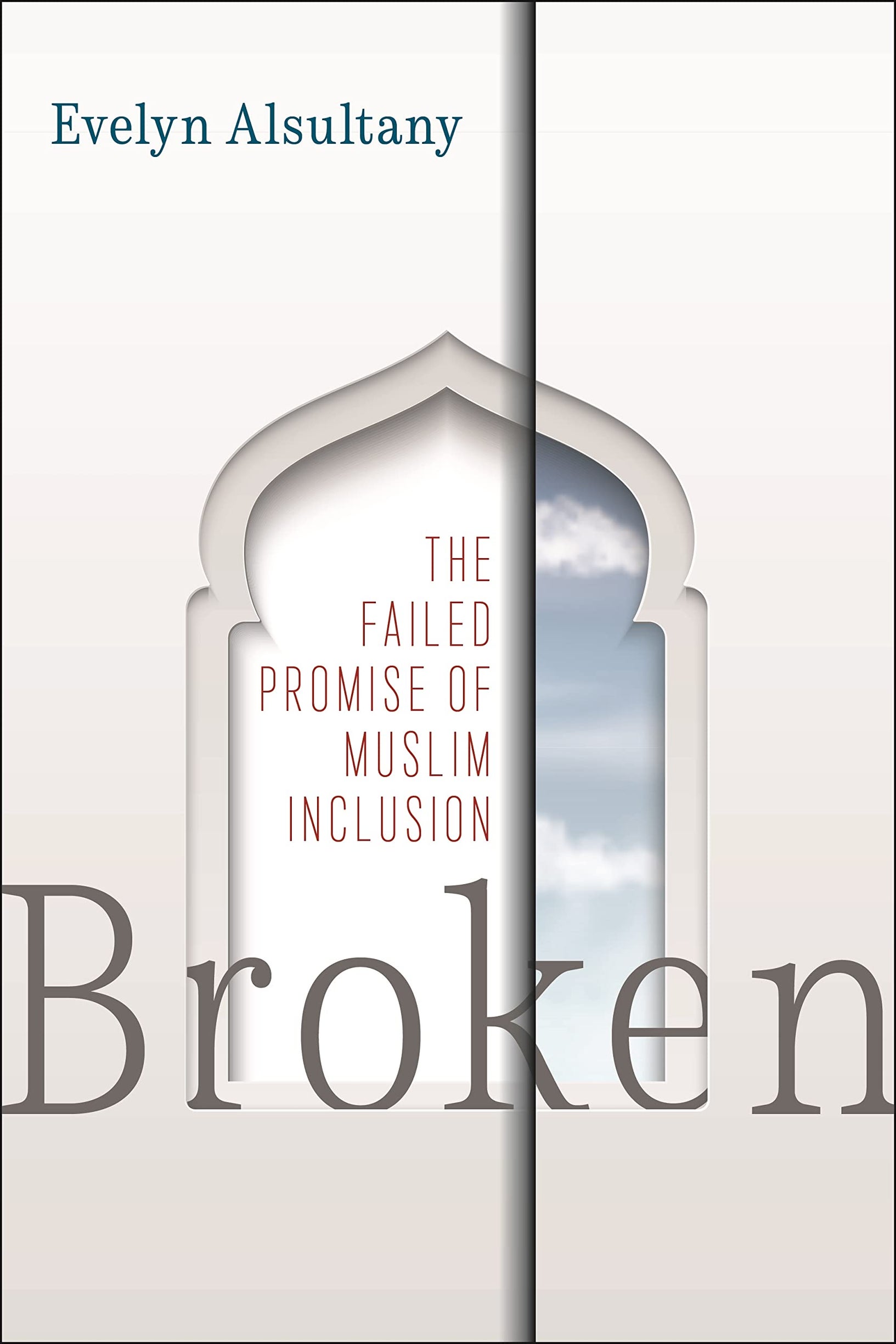
Broken: The Failed Promise of Muslim Inclusion by Evelyn Alsultany explores the limits of diversity and inclusion initiatives concerning Muslims in the United States. She examines how institutions like the media, Hollywood, law enforcement, the criminal justice system, corporations, and universities attempt to promote Muslim inclusion, yet end up reinforcing negative stereotypes about Muslims.
Alsultany organizes her book around the major institutions that have taken steps toward Muslim inclusion. She uses case studies of actual events to show how Muslims are represented in mainstream narratives of diversity and inclusion. Through the concepts of crisis diversity, Alsultany shows that Muslim inclusion tends to be a reactive measure following a crisis rather than a sustained commitment to diversity. The media, according to Alsultany, places a crucial role in shaping the identity of "good Muslims." For example, after 9/11, Hollywood constructed a narrow identity of the patriotic Muslim - a Muslim who openly affirms loyalty to the US and is often depicted as working for the government or military. However, Alsultany notes that this depiction portrays Arabs and Muslims as patriotic only when they wholeheartedly support and serve the US government. Another identity is the nominal Muslim - a Muslim who was raised in a Muslim family but identifies as secular. This depiction, according to Alsultany, implies that Muslims can only be included in liberal multiculturalism if they abandon Islam as their defining identity. Additionally, she critiques the law enforcement and criminal justice system's failure to classify violent crimes against Muslims as hate crimes and how corporations respond to discriminitory cases involving their employees. She also draws from her experience as a faculty member at the University of Michigan to illustrate how universities selectively apply DEI principles in ways that maintain existing power structures. Alsultany points out that these initaitives and actions of the institutions do not challenge broader structures that lead to the marginalization of Muslims. She asserts that Muslims want accurate representation in Hollywood, recognition of racialized violence in the criminal justice system, accountability from corporations on discrimination, and meaningful inclusion in university diversity initiatives.
Broken is a timely book, especially as diversity, equity and inclusion efforts face increasing political challenges. Alsultany provides an important perspective on race, religion ,and the media and institutions. The book is particularly relevant today, as discussions of representation repeatedly overlook the systems of power that maintain exclusion. The book provides a convincing critique of the seeming nature of inclusion ppolicies and demonstrates how they sustain marginalization rather than dismantle it. A limitation of the book is that the author fails to provide a clear path that would ensure genuine inclusion of Muslims in the United States. Additionally, given that the media and Hollywood influence audiences worldwide, it would have been valuable to explore how their somewhat negative portrayal of Muslims is received outside of the United States. Despite these limitations, Alsultany sets us on a path of reflection concerning the role of institutions in reinforcing inequality and how we can change them.
Alsultany, E. (2022). Broken: The Failed Promise of Muslim Inclusion. New York: New York University Press.